Your Last Name
Aa
AI

Your Last Name

1. Your Last Name How do you become the kind of leader that leaders trust? The answer I found is counterintuitive. At forty years old, I sat at the kitchen table with bills stacked in three uneven piles—mortgage, credit cards, utilities—and no clear way forward. The house was quiet. Kim had gone to bed an hour earlier, and I’d told her I’d be in soon, but I couldn’t move. I just sat there, staring at the numbers that didn’t add up. We’d lost everything. In the dim light of the kitchen, I started thinking about how I’d gotten here. Not just the immediate failure, but the pattern underneath it. I thought about someone I knew who’d married into a family with significant wealth and clout. From the outside, it looked like they’d made it. A recognizable last name, the right connections, the kind of life most people would envy. But they were always miserable, chasing validation from someone else’s legacy rather than finding peace in their own. I’d watched that for years and told myself I was different. But sitting at that kitchen table, I realized I’d been doing the exact same thing, just in a different way. Every partnership I’d entered into, I’d been looking for someone else’s platform and credibility to make me legitimate. I’d spent twenty years hitching myself to someone else’s name, convinced that proximity to their success would become my success. And it had ended empty every time. The problem wasn’t bad timing or bad luck. The problem was that I’d never learned to stand on my own. At forty years old, my perceived safety net was gone, and for the first time in my life, I had no choice but to start charting my own path. Six months after that night at the kitchen table, I found myself in the oilfield—an industry that was swim or drown, and where I had no borrowed credibility to keep me afloat. Just my work ethic and whatever I could prove in real time. No safety net. No one’s name to lean on, no one’s reputation to hide behind. It was terrifying. And exactly what I needed. The owner I worked for was crazy aggressive. Not in a motivational-poster kind of way—in a way that tested you and pushed you to the limit every single day. It felt like he held your head underwater as long as he thought you could take it, then pulled you up for one breath before you went back under. Not literally, but close enough that you felt it in your chest every morning when you walked in. The company was growing at a staggering rate—from 250 employees to 800 in just eighteen months. The environment was relentless. High pressure. High stakes. Every day felt like a test, and the bar kept moving higher. We worked so hard and so fast that it was both beyond challenging and deeply fulfilling. Deren Boyd, who oversaw our safety and compliance as VP, would often say, “If you see me walking down the Kilpatrick Turnpike naked and stumbling around, be kind enough to stop and pick me up.” But over time, it taught me something I had never learned in all those years of hitching myself to someone else’s wagon: adversity doesn’t build character, it reveals it. Pressure doesn’t create insecurity. It exposes it. For the first few years, I kept waiting for the owner to recognize what I was bringing to the table. I worked harder than I’d ever worked in my life—stayed late, took on extra projects, solved problems before he even knew they existed. I was good at my job but was rarely acknowledged for it. Every time he walked past without a word, every time he gave credit to someone else in a meeting, every time he made a decision that seemed to ignore everything I’d just accomplished, I felt it like a punch to the gut. I started keeping score. Replaying conversations in my head. Building a case for why I deserved more recognition, more authority, more respect. I told myself I was just being observant, but really, I was doing what I’d always done: waiting for someone else to tell me I was good enough. I was terrified of failing again. Terrified that if I couldn’t make this work, then maybe I really was the problem. Maybe I didn’t have what it took. And if the owner didn’t validate me, then what did that say about my value? This went on for five years. Five years straight without a single day off. There were days off, technically, but not for me. I worked every day, giving every ounce of effort, every bit of skill, every hour I had. And still, it didn’t seem like enough for him. The bar kept moving. The satisfaction never came. One evening, after another grueling week, I sat in my truck in the parking lot. Engine off. Windows cracked. Just thinking. If me doing absolutely everything I possibly could, firing on every cylinder, still wasn’t good enough for this group, then what did that mean? The realization came quietly: I didn’t need his validation. I thought about potential like a cup. I had filled my cup to the brim with every God-given ability I possessed. Every skill, every hour, every ounce of effort—I had given it all. And if I had done that, if I had lived up to every ability God had given me, then I was satisfied with myself. What ran over the edge of that cup to satisfy others—that wasn’t my concern anymore. That wasn’t my responsibility. I’d handed him my power because I’d handed him my validation. Every decision I made, every project I took on, every late night I worked—I was doing it to prove something to him. To earn his respect. To hear him say I was valuable. And as long as I needed that from him, I’d never be free. I decided right there: I’m not borrowing someone else’s last name again. I’m building the one God’s already given me. The shift wasn’t immediate. Old habits die hard, and I’d spent years operating from a place of dependency. But slowly, I started to see my role differently. I stopped living for the approval of others. Stopped replaying criticisms in my head at night. Stopped measuring my value by whether I was noticed. And somewhere in that process, I started to understand something I’d missed entirely: the owner isn’t my competitor. I was the builder beside him, not above him. Not competing for his position. Not secretly wishing I had his authority. Just doing my job, building value, and figuring out how to be excellent in the role I actually had. When I stopped needing him to validate me, I could finally respect him without resentment. I’ve carried this forward with every boss I’ve had since. The owner is the one who took out a mortgage on their home when they were starting out, who spent 80+ hour weeks for the first five years, all with no guarantee they’d get any reward in the end. My job is to do my job well, serve the company that employs me, and build my career while I’m at it. I don’t have to like everything the owner or my boss does, but they deserve my respect—because they’re the reason I have a job, and I can be glad for the harvest they’re reaping. After all, because of them, so can I. This approach has drastically changed my relationship with employers and my own fulfillment in my career. By choosing respect for the owner—whether generous and kind or a little rough—I’ve been able to stay focused on myself and my responsibilities with excellence, be an anchor for those around me, and even be a positive influence and catalyst for change for the owner. This has allowed me to earn the leader’s trust and respect in return—not because I need it to thrive, but because I don’t. My identity, rooted in Christ, became steadier than company status or any owner’s opinion. I didn’t need their name to feel significant. I needed my own name to mean something—and that happened through the daily choices I made, the integrity I built, the results I delivered. When I knew my worth, I didn’t need to diminish theirs to feel valuable. When I honored the seat they sat in, I could honor the work I was doing beside them. So how do you become the kind of leader that leaders trust? Respect and honor yourself enough to respect and honor the owner or boss. The Cost of Keeping Score Once you stop needing the owner’s name, you stop needing to tear down the owner’s seat. That’s the pattern I’d been living in for years without realizing it. Dependency breeds resentment. Resentment breeds judgment. And judgment shrinks you while convincing you it’s making you stronger. Here’s what dependency actually looks like: You need the others' approval to feel valuable. You wait for their praise to know you’re doing well. You replay their words—or their silence—on the drive home. You measure your worth by whether they noticed your contribution in the meeting. You keep a mental scorecard of what you’ve done versus what they’ve acknowledged. And when they make a decision you disagree with, you don’t just question the decision—you question their competence, their character, their right to lead. If any of that sounds familiar, you’re not alone. I lived in that space for years. Here’s the principle I had to learn the hard way: when I’m dependent on the owner or my boss for my worth, I hold judgment over them. And judgment doesn’t punish the owner. It shrinks the #2. Why? Because judgment is a distraction from the real work. When you’re focused on critiquing the owner, you’re not focused on building your network, ability, and value. You’re spending energy on someone else’s decisions instead of maximizing your own potential. Judgment feels like strength, but really, you’re just keeping yourself small. The reason we judge so easily is because we don’t understand what the owner is actually carrying. We see the authority, the decision-making power, the financial rewards. What we don’t see is the risk, the burden, the loneliness of the position. You think you feel trapped? If you’re an owner, you’re way more trapped. You’ve got investors to answer to, employees depending on you, loans in your name, sleepless nights wondering if you made the right call. You can’t just quit when things get hard. You can’t walk away when you’re frustrated. The weight of the entire operation rests on your shoulders, and if it fails, it’s your name on the line—literally. Your credit. Your reputation. Your family’s security. The owner isn’t just sitting in a position of authority, they’re sitting in a position of exposure. They risked capital, reputation, and years of their life to build something. And whether you agree with every decision they make or not, that risk deserves respect because you’re benefitting from it. When you understand the weight the owner carries, you see them differently. I’ve worked with owners who all came from very different places. Darvin Knapp started on a drilling rig in Pecos, Texas—no education, no connections, no safety net. Just grit and the willingness to risk everything on his own ability to outwork everyone else. Others I knew bet the family ranch. They borrowed money when no one else would and carried the weight of knowing that if they failed, they would lose not just the business but their legacy. Gary Gillette carried a different burden—the discipline of building slowly, educating himself, protecting what he built through structure and patience when everyone around him was swinging for the fences. I have watched women who fought their way up the ladder in a male-dominated industry, proving their competence at every single level when others were given the benefit of the doubt. Mitchell Shauf carried the weight of a comeback—overcoming failure, surviving a family business split, and rebuilding his reputation from the ground up to become COO of a major company. I think about people who walk out of church on Sunday morning and immediately critique the sermon. Was it good? Was it bad? Did the preacher go too long? We do it without thinking, as if our opinion is what matters most. But here’s what I eventually realized: My job isn’t to sit in judgment over the sermon. My job is to focus on my own walk with God. The pastor is still in the seat. They have been chosen to be in that position, not me. I need to respect that. I think about my fuel gauge of spiritual fruitfulness sometimes. In my mind, I’m a pretty fruitful Christian and I have a right to an opinion about the leadership of my church. But if I actually look at my own data—how many people have I led to Christ in the last two years? How much am I actually doing versus thinking about doing?—the gauge reads lower than I’d like to admit. The same principle applies at work. You can judge the owner all day long. You can pick apart every decision, question every priority, and convince yourself you’d do it better. But at the end of the day, they built it and you haven’t. And when you spend your energy judging them, you’re not hurting them. You’re hurting yourself. You’re putting energy into critiquing someone else’s work instead of building your own contribution. You’re focused on their shortcomings instead of your own growth. Building Your Own Name When I finally broke free from the need to attach myself to someone else’s name, I didn’t do it by deciding I was better than them or that I didn’t need anyone. I did it by building something that was mine. Not a company or title, but a reputation. Your reputation is built through value, integrity, and consistency—not proximity to power. You don’t need the owner’s last name to have significance. You need your own name to mean something. And that happens through the daily choices you make—how you handle pressure, how you treat people, how you deliver results, how you show up when no one’s watching. There’s a proverb that says, “A good name is more desirable than great riches; to be esteemed is better than silver or gold.” When we remember our true last name is in Christ, we can understand, value, and grow our own name without getting attached to it. Ultimately, I want to honor the last name of Christ, while honoring the last name he’s given me on earth as well. Because when I build an honorable name, I honor the one who gave it to me. What Trust Actually Requires Understanding the owner’s burden doesn’t mean you become a doormat, stop advocating for what you believe is right, or stop bringing your own insight to the table. What it does mean is that you stay grounded in your role. I can’t help but think about Samwise Gamgee, whose story in The Lord of the Rings captures something essential about what it means to be a number two. From the very beginning, Sam is not the hero everyone looks to. He isn’t chosen to carry the Ring. The fate of Middle-earth and the responsibility to destroy the Ring falls to Frodo. What makes Sam extraordinary is precisely how he understands and embraces his role: to help Frodo succeed, to protect him while he bears the weight of the Ring, and to stay close when the road grows dangerous and they’re traveling through hostile lands with enemies on every side. When the mission feels impossible and the destination seems unreachable, Sam’s job is to help keep going. That doesn’t make Sam weak or diminished in any way. On the contrary, it makes him a hidd

Your Last Name35%
Chapter 1
Shawn Priddy
2:15-8:15 (1x)12:30
1x

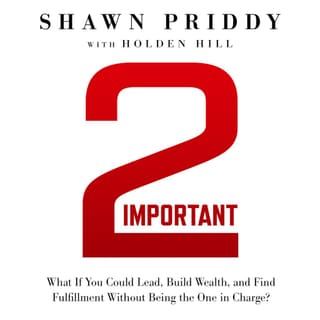
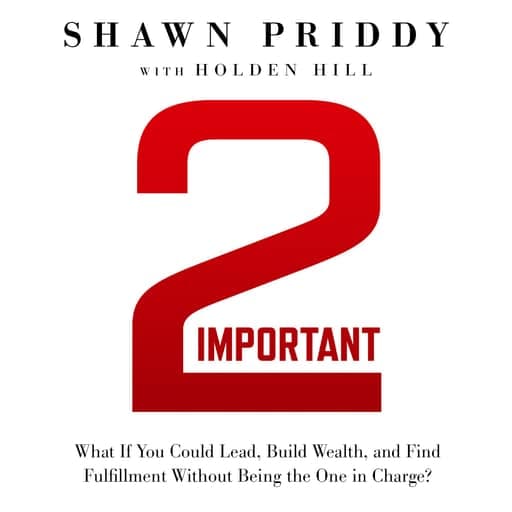
2 Important

What If You Could Lead, Build Wealth, and Find Fulfillment Without Being the One in Charge?

By Shawn Priddy

From the book

Chapter 1 · Your Last Name

1. Your Last Name How do you become the kind of leader that leaders trust? The answer I found is counterintuitive. At forty years old, I sat at the kitchen table with bills stacked in three uneven piles—mortgage, credit cards, utilities—and no clear way forward. The house was quiet. Kim had gone to bed an hour earlier, and I’d told her I’d be in soon, but I couldn’t move. I just sat there, staring at the numbers that didn’t add up. We’d lost everything. In the dim light of the kitchen, I started thinking about how I’d gotten here. Not just the immediate failure, but the pattern underneath it. I thought about someone I knew who’d married into a family…

Inside this book

01/12
Chapters
01

Your Last Name

Priddy recounts a transformative journey where he learned the importance of self-validation over seeking approval, ultimately discovering that true leadership stems from respecting oneself and others.

02

Groundhog Day

Reinforcing the value of consistent effort, Priddy highlights how neglecting routine tasks can jeopardize stability, drawing lessons from a pivotal conversation about asset management in the volatile oil industry.

03

The North Star

Through the initiative of a sales team to reclaim their market position, Priddy reveals how operationalizing potential through strategic measurement transforms execution into value creation.

04

Looking Around the Corner

Faced with operational challenges in a harsh winter environment, Priddy advocates for proactive planning and training to mitigate predictable issues, leading to improved efficiency and crew morale.

05

The Influence Tree

Sharing his experience nurturing young leaders, Priddy emphasizes that true legacy is built not through personal gain, but by empowering others to grow and thrive within their roles.

06

An Owner Mindset

Priddy illustrates the shift from a transactional workplace to one rooted in accountability, showcasing how an 'owner mindset' can foster a culture of mutual respect and contribution.

07

The Bottleneck

By exploring the pitfalls of perceived career security, Priddy underscores the importance of developing systems that empower collective performance and reduce reliance on individual expertise.

08

Empower Others

Focusing on empowerment, Priddy reflects on how active listening and facilitating small changes can significantly enhance employee satisfaction and cultivate a nurturing organizational environment.

09

The Real Culture Killer

Priddy stresses that a healthy workplace culture thrives on trust and transparency, advocating for self-assessment of organizational conditions to foster genuine growth.

10

Don't Be Afraid to Die

Confronting the moral challenges of leadership, Priddy shares his journey to prioritize integrity over profit, revealing the courage it takes to make sacrifices for a people-centered workplace.

11

I Don't Do Drama

Advocating for authenticity, Priddy shares how straightforward communication and integrity can triumph over the superficiality often found in corporate interactions.

12

Credit Score Zero

After a dramatic financial collapse, Priddy discusses the liberation of living without debt, shifting his perspective towards creating value over accumulating traditional measures of success.

1. Your Last Name How do you become the kind of leader that leaders trust?

The answer I found is counterintuitive. At forty years old, I sat at the kitchen table with bills stacked in three uneven piles—mortgage, credit cards, utilities—and no clear way forward.

The house was quiet. Kim had gone to bed an hour earlier, and I’d told her I’d be in soon, but I couldn’t move.

I just sat there, staring at the numbers that didn’t add up. We’d lost everything.

In the dim light of the kitchen, I started thinking about how I’d gotten here. Not just the immediate failure, but the pattern underneath it.

I thought about someone I knew who’d married into a family with significant wealth and clout. From the outside, it looked like they’d made it.

Immersive mode

Read with your eyes.
Hear with your ears.
Comprehend at speed.

Immersive mode plays the audiobook while highlighting each word in the text in real time — turning two formats into one experience.

Twofold comprehension. Reading and listening together engages both pathways — retain more without re-reading.
Comprehend at speed. Process at 1.5× or 2× playback without losing the thread — the words stay anchored on the page.

AI Assistant

A thinking partner, trained on this book

Brainstorm ideas, ask clarifying questions, and turn your thoughts into notes — without leaving the page.

Brainstorm ideas for meClarify the core messageSave this as a note
Hey, ready to dive into this chapter? Let's chat about what's caught your ear so far.
That line really stood out to me. Can you turn that into a note so I can come back to it later?
Absolutely, it's saved. What do you want to explore next?
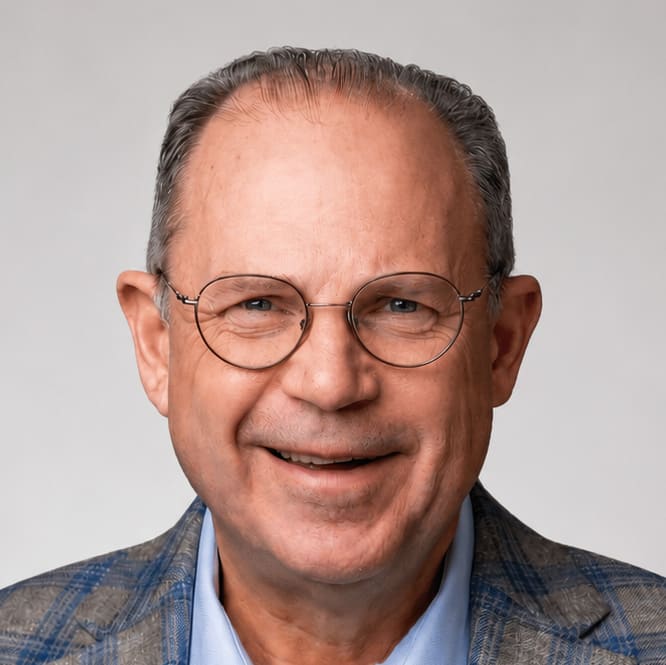
Shawn Priddy

About the author

Shawn Priddy

Author & Coach for Second-in-Command Leaders

Shawn Priddy spent more than twenty years as the indispensable "number two" — the right-hand leader every owner leans on but few ever fully see. He came up the hard way: oilfield parking lots, frozen job sites, hotel conference rooms, and a kitchen table at forty where, having lost everything, he had to rebuild from a credit score of zero. What he learned in that rebuild became his life's work — that you don't have to be the one in charge to lead, build real wealth, and find deep fulfillment. Today he coaches and mentors the 2's and 3's: the operators and second-in-command leaders who carry more than anyone tracks. He writes from a faith rooted in Christ and the conviction that the work of the number two is too important to do halfway. He and his wife, Kim, have built their life and family on that same principle.

Let's get in touch

Print + Digital

Hold it. Read it. Listen.

Every way to read “2 Important” — printed and shipped, audiobook for the road, eBook in your pocket. Yours forever.

Paperback edition

Ships in 5–10 business days

eBook

Read on any device, instantly, forever.

Audiobook

Listen anywhere, with synced narration.

Printed on demand by our print partners. No returns except defects — damaged or lost shipments are reprinted at no cost.

Begin Reading Today

2 Important

What if you could lead, build real wealth, and find deep fulfillment — without being the one in charge? In every organization there's someone everyone relies on to know how things actually work. They see the gaps before anyone else, fix what falls between the cracks, and carry a weight that never shows up in a job description. They're the number two — and their seat is one of the most important and least understood in all of business. Drawing on two decades in the field — and a hard-won comeback from losing everything at forty — Shawn Priddy hands the number two a framework for owning the seat they're already in. You'll learn how to build your own name instead of borrowing someone else's, create value no one assigned you, develop people who outgrow you, solve problems before they surface, and make real financial progress without needing to be the owner. This isn't about waiting to be noticed, promoted, or put in charge. It's about leading from conviction, right where you are. Because the work of the number two is too important to do halfway.

2 Important | Shawn Priddy — Storybase