
Chapter 1: The heart of Service
Aa
AI

Chapter 1: The heart of Service

Over the years, I have watched the Lord perform countless miracles in people’s lives and in dire situations—from helping cities recover from ice storms and hurricanes, to rescuing families from floods and house fires, to seeing children saved from tornados and explosions. I even witnessed the Lord provide a minivan for a family who just lost everything. Relief was possible due to the church networks in the area, established from a model God had given me long ago. As leader of United in Crisis (UIC) and founder and former executive director of the Austin Disaster Relief Network (ADRN), I have had the privilege of watching the Lord work these miracles firsthand over the last fifteen years. UIC is a crisis training and equipping nonprofit organization with a vision to see every church in every city, united and ready for crisis. Through collective unity, the Church can respond to crisis as the light of their city and make the gospel of Christ known on the earth and His salvation to the nations (Psalm 67). But if I’m going to share the stories of those miracles, I have to start with the miracles that He first did in my heart long before I started any organizations or partnerships with churches. As you will see throughout the powerful encounters and strategies shared in this book, the work of Christ always starts inside of us before we can go on to serve effectively. Growing up, I was raised by faith-filled parents who took me to church, almost every Sunday. As a Catholic boy, I went through First Communion, Confirmation, and attended classes as my spiritual upbringing. But most of the time, I was not truly connected to Christ, and thought only about getting home to watch Sunday football or jam with my brothers’ and my garage band. The Lord did not have my heart and I was lost in myself. My mom prayed without ceasing for our family, and my dad went out of his way to financially help those in need. Our family’s hope was solely in Jesus, but we also looked to Mother Teresa and Dr. Martin Luther King Jr. as heroes—both of those individuals had love for the people in their nation, cities and in their neighborhoods, a love that was demonstrated in action. While I knew about Jesus in an academic sense and I prayed to Him off and on, I did not see Him as Lord of my life. I was not born again. He was calling my name, but I was too attracted to the things of the world and was living for myself. Life was all about me, as I focused on gaining personal wealth and finding happiness in things outside of God. This was my life from my teen years until my early thirties. Looking back, I’m stunned by the emptiness of it all. However, by Jesus’s grace, that makes the moment He got ahold of my heart all the more impactful. I stood over the nightstand, looking down at my then girlfriend’s Bible. Following an inclination I didn’t really understand, I picked it up and held it at my chest as I began to flick through the thin pages. It wasn’t long before the words of Jesus struck a chord. “‘For I was hungry and you gave me something to eat, I was thirsty and you gave me something to drink, I was a stranger and you invited me in, I needed clothes and you clothed me, I was sick and you looked after me, I was in prison and you came to visit me.’ “Then the righteous will answer him, ‘Lord, when did we see you hungry and feed you, or thirsty and give you something to drink? When did we see you a stranger and invite you in, or needing clothes and clothe you? When did we see you sick or in prison and go to visit you?’ “The King will reply, ‘Truly I tell you, whatever you did for one of the least of these brothers and sisters of mine, you did for me’” (Matthew 25:35–40). I’d grown up hearing those words, but right then, they pulled at me like I was reading the message for the first time. It nipped at the back of my mind, asking the question of who I was truly living for. Flipping through the Bible, I came across another section that stood out as if He was speaking directly to me. “Whoever wants to be my disciple must deny themselves and take up their cross and follow me. For whoever wants to save their life will lose it, but whoever loses their life for me will find it. What good will it be for someone to gain the whole world, yet forfeit their soul? Or what can anyone give in exchange for their soul? For the Son of Man is going to come in his Father’s glory with his angels, and then he will reward each person according to what they have done” (Matthew 16:24–27). It was all such a foreign mentality, but it made sense. Though I claimed to be Christian, what purpose did my life serve if all I did was focus on making myself comfortable? Hadn’t God made me for so much more than that? I was both convicted and moved. I was tired of living like the long-lost son who spent the Father’s money on wild living, only pleasing myself. I was ready to be all in for Christ, to know Him intimately, and to live for Him every day, whatever it took. At the same time, I was stepping into this new fervor for the Lord, I also got an apartment with a longtime friend, Mike Durham. We worked together at a computer company, selling computers in an era when it was cool and unheard of. We went out to a restaurant one night to have dinner, and as we sat and caught up on each other’s weeks, the Lord revealed a vision to us. The surroundings of the restaurant faded and I found myself looking inside of a gigantic building. It was packed with people of all walks of life, volunteering, helping hundreds of individuals and families in need grab clothes, blankets, and other necessities. Their faces shone with awe and joy as they loved on those they assisted. I smiled within my heart as I watched this amazing scene. Still, I knew this: The volunteers were loving them as they would love a friend or one of their own family members, not as a project. They were all equals here. I felt a love in my chest that I still can’t explain. I glanced toward the top of the building, and three words rested there: House of Unity. Suddenly, I was back in the restaurant, and I locked eyes with Mike. Both of our jaws nearly hit the floor. “Dude! What just happened to us?” Mike said, gasping as his hand clutched his shirt. I returned with an ecstatic look. “I think that was God!” We didn’t know what it all meant yet, but the next day, we shared the experience with some of our coworkers. Though, the responses weren’t enthusiastic, and before we knew it, arguments and fights erupted over it. Instead of indulging in the controversy, Mike and I decided to put our heads down and come up with a tangible way to help people. We picked up a few bags of hamburgers that night and drove around town, offering them to people in need on the streets. As we returned home that night with empty burger bags, I wondered, “Was that it? Was that all the God wanted us to do?” I reflected on the biblical story of the Good Samaritan and how he went out of his way to help another. What would it look like for all believers to live their lives with that same passion for the world around us? That night, the Lord continued to stir in my heart, planting a passion for the lost and those in need. Little did I know how much more he had in store. The Good Samaritan In Luke 10:25–37, Jesus tells the powerful story of a man who was journeying from Jerusalem to Jericho when suddenly, he fell prey to robbers. These merciless thieves beat him nearly to death, stripped him of his clothes, and left him bleeding out on the side of the road. As the day wore on, a priest happened down the same road. Upon seeing the injured man, he crossed to the other side, his thoughts a whirlwind of excuses and justifications. Perhaps he feared defilement or danger, or maybe his heart had hardened against such sights. Regardless, he continued on his way, leaving the wounded man in his anguish. Not long after, a Levite, known for his religious devotion, approached. He too saw the man, lying there in a pool of his own blood. He paused, his eyes perhaps reflecting a momentary flicker of concern, but then, as if pulled by invisible strings of duty and self-preservation, he too passed by on the other side. These two men were known for moral upstandingness, yet they couldn’t be bothered to help a dying man. They were too busy, too important, too detached. Their actions shouted, “Someone else will help.” As the sun began its descent, casting long shadows across the rocky terrain, a Samaritan, a man from a region whose people were despised by many in those days, came upon the scene. But unlike the others before him, his heart was moved with compassion. Dismounting his donkey, he rushed to the injured man’s side. He cleaned and bandaged his wounds, using his own oil and wine as salves and dressings. Then, with a strength born of mercy, he lifted the man onto his own mount. They traveled until they reached an inn. There, the Samaritan took care of him through the night, ensuring his comfort and safety. When morning came and it was time for the Samaritan to continue his journey, he did not simply leave the man. Instead, he gave the innkeeper two silver coins and instructed him to take care of the wounded traveler. “Whatever more you spend,” he said, “I will repay you when I return.” Reflecting on this story, let’s put it into terms of a city in crisis, asking a challenging question: Who do the people in a city look to as the Good Samaritan? The Church, or the government? This is the question I have been asking myself since the Lord gave me that vision, and I have not liked the answer I have been forced to recognize. At least in my city of Austin, Texas, the answer was clearly the government. To fully consider this question, let’s rewind history and look at one of the most sobering books I have read on this subject, The Tragedy of American Compassion by Marvin Olasky. From his extensive research, he wrote that in the late 1800s, the Church took on the role of the Good Samaritan by operating ministries to assist the poor of their community. They provided essentials such as food, shelter, fuel, medicine, and first aid. They assisted in securing jobs for the unemployed, helping kids with their schooling, addiction rehabilitation, and support for the crippled and homeless. He also gives an example of two boroughs in New York City that had 397 social agencies run by 112 Protestant churches, living out the role of the Good Samaritan. He sums it up well in this quote: “The biblically orthodox Christian of the late nineteenth century worshiped a God who came to earth and showed in life and death the literal meaning of compassion—suffering with. Christians believed that they—creatures made after God’s image—were called to suffer with also, in gratitude for the suffering done for them, and in obedience to biblical principles” (Olasky, 113). This ties back to the true meaning of compassion—a word that we have watered down. Its current definition in the English language, according to Oxford Languages, explains it as “sympathetic pity and concern for the sufferings or misfortunes of others.” However, believers in the late nineteenth century lived out a deeper compassion—sympathy alone is not enough. We must walk alongside those suffering from addiction, those who struggle with homelessness, the widowed, and many more to help them get back on their feet. As Olasky explains by using the words of the Industrial Christian Alliance, they implemented “religious methods—reminding the poor that God had made them and had high expectations for them—to restore the fallen and helpless to self-respect and self-support” (113). We must walk alongside those suffering from addiction, those who struggle with homelessness, the widowed, and many more to help them get back on their feet. Unfortunately, as the government also stepped in and began providing material assistance, their well-intended efforts had unfortunate consequences. They might have given financially, but they didn’t step in physically to help those in need truly restore their lives. Minister Joseph Crook stated that “It is very easy to make our well-meant charity a curse to our fellow men.” This may seem extreme, but as people began to rely solely on the idea of ongoing government support, it ended up hindering them. As Mary Richmond stated, it became “regarded as a practically inexhaustible source, and people who once receive it are likely to regard it as a right, as a permanent pension, requiring no obligation on their part” (Olasky, 112). Therefore, this strictly material help—although no one meant it as harm—didn’t take into account the full situations that these people faced. As one charity magazine at the time noted, “True philanthropy must take into account spiritual as well as physical needs” (Olasky, 112). We can’t have one without the other. However, the Church began to take steps back as the government took on more responsibility, and I believe that the Church has actually become the priest and Levite who pass by those who are wounded. Instead of leaping to help as the Church once did, many now shrug it off with an indifference that says, “The government will take care of those in need—they’ve got housing, programs, food stamps.” As a result, the Church has become comfortable stepping away from the role of the Good Samaritan within their cities. Honestly, it worked well for the government to take on a lot of these responsibilities. Why? They have a structure in place and a network among themselves that allows for swift communication and planning when people are in crisis. Most churches are not networked together well, so even when they try to help in a crisis, they may not have the resources or information to properly carry out the desire to help. They don’t have a plan in place, nor the infrastructure, to help people in crisis on a larger scale. Amid large crises and natural disasters, many churches get overwhelmed and some implode—the pastor gets burned out, the staff are overwhelmed, and they ultimately have to stop altogether or close their doors. They simply are not able to provide spiritual support and leadership for their flock while simultaneously operating a full-blown disaster response effort. Our goal was not to shut the government out or take all of the reins ourselves. The government offers numerous benefits that are important to acknowledge and take into account. But how powerful would it be to see infrastructures or safe havens from the Church in times of great natural disaster or other forms of crisis? Trained volunteers would be able to reach the community with the gospel, connecting them with the Church to provide blessings on a heart level that the government could never give. A Hurricane-Sized Vision In the days following my hamburger-giveaway escapade, I couldn’t get the Lord’s vision of Hous

Chapter 1: The heart of Service35%
Chapter 1
Daniel Geraci
2:15-8:15 (1x)12:30
1x

United in Crisis

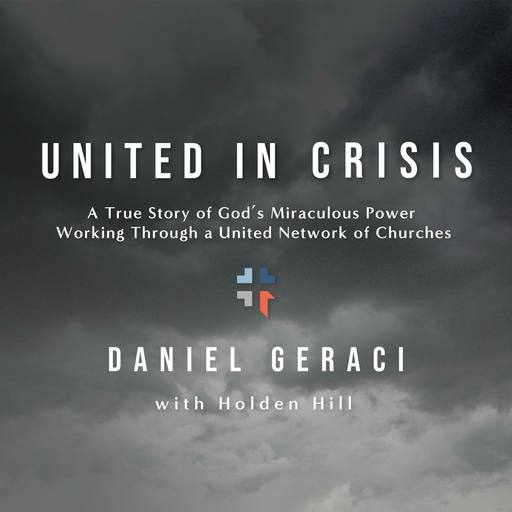
A True Story of God's Miraculous Power Working Through a United Network of Churches

By Daniel Geraci

  • Not since reading the life story of George Mueller's incredible faith ministry among orphans during nineteenth-century England have I read an account of such miracle-faith as I've read in United in Crisis by Daniel Geraci. In Mueller's lifetime he cared for more than 10,000 orphans and started 117 schools that provided Christian education for some 120,000 children, all by radical faith. Daniel Geraci has done just that in demonstrating how the body of Christ in a city or region can unite with local governments to minister to those facing crisis situations. Seriously, this is the best picture of how the Church, Christ's greater body globally, has been called to behave in impacting their communities and nations to advance Christ's kingdom that I have ever read.

    Dr. Dick Eastman

    President, America's National Prayer Committee

  • Daniel Geraci is a man of the highest character with incredible fruit. He is extremely fruitful as a husband, father, ministry leader, and community advocate. Daniel intimately loves Jesus and has a rare gift to both minister to people in crisis and mobilize others to do the same. If you have a God-given desire to help hurting people and serve communities in need, please read this book and share it with everyone in your circle of influence. It will inspire you to seek God for a united church network solution in your city and for an equipped and trained church that will respond together for a greater level of impact and transformation of your city.

    Brian Alarid

    President, World Prays

From the book

Chapter 1: The heart of Service

Over the years, I have watched the Lord perform countless miracles in people’s lives and in dire situations—from helping cities recover from ice storms and hurricanes, to rescuing families from floods and house fires, to seeing children saved from tornados and explosions. I even witnessed the Lord provide a minivan for a family who just lost everything. Relief was possible due to the church networks in the area, established from a model God had given me long ago. As leader of United in Crisis (UIC) and founder and former executive director of the Austin Disaster Relief Network (ADRN), I have had the privilege of watching the Lord work these miracles firsthand over the last fifteen years. UIC is a crisis…

Inside this book

01/14
Chapters
01

Chapter 1: The heart of Service

Geraci reflects on the transformative power of service and compassion, illustrating how individual growth fosters community healing through shared experiences and faith.

02

Chapter 2: Light of the City

As Geraci faces personal setbacks amid devastating hurricanes, he learns that even failures can lead to spiritual growth and a renewed commitment to serving others.

03

Chapter 3: Building an Ark

Faith and reliance on God become crucial as Geraci recounts the early days of establishing the American Disaster Relief Network, highlighting the need to trust in divine promises during uncertain times.

04

Chapter 4: Preparedness Empowers Purpose

Drawing on the biblical parable of the ten virgins, Geraci emphasizes that preparedness empowers purpose, urging believers to be ready to assist others in times of need.

05

Chapter 5: Walking With Survivors

Geraci addresses the emotional complexities volunteers face when supporting disaster survivors, illustrating the struggles of providing immediate relief within the constraints of limited resources.

06

Chapter 6: Fire and Mercy

In the wake of catastrophic wildfires, Geraci and his team grapple with the challenges of delivering aid, reaffirming that faith can empower even those who feel unequipped.

07

Chapter 7: Birth of Unity

Amid the division following the Bastrop fires, local pastors come together to unite and serve their community, highlighting their collective responsibility and commitment to embodying Christ's love.

08

Chapter 8: Multiplying Impact

Geraci illustrates the power of community collaboration in response to disasters, drawing on biblical teachings to emphasize the importance of multiplying impact through shared resources.

09

Chapter 9: Ready to Respond

As Geraci and his team transform a cramped office into a dynamic resource hub, they experience a divine vision that reshapes their approach to crisis response and community service.

10

Chapter 10: Prayer Wall

The importance of prayer becomes apparent as Geraci addresses the emotional toll on volunteers, recognizing that their spiritual well-being is essential for effective crisis response.

11

Chapter 11: God of the Impossible

In the face of Hurricane Harvey's devastation, Geraci showcases how the Austin Disaster Relief Network rallies to provide critical support and care for an overwhelmed community.

12

Chapter 12: Surrendering the Vision

Geraci's pivotal vision during recovery efforts prompts a transformative surrender of control, leading to a decentralized network of churches poised to respond more effectively to crises.

13

Chapter 13: Darkness Reveals the Light

During the COVID-19 pandemic and a severe winter storm, Geraci highlights how the Austin Disaster Relief Network's adaptability showcases the church's leadership potential in times of crisis.

14

Chapter 14: United in Crisis

As Geraci reflects on his 14-year journey with ADRN, he emphasizes the launch of the 'United in Crisis' initiative, aimed at equipping churches to actively serve and respond to future crises.

Over the years, I have watched the Lord perform countless miracles in people’s lives and in dire situations—from helping cities recover from ice storms and hurricanes, to rescuing families from floods and house fires, to seeing children saved from tornados and explosions. I even witnessed the Lord provide a minivan for a family who just lost everything.

Relief was possible due to the church networks in the area, established from a model God had given me long ago. As leader of United in Crisis (UIC) and founder and former executive director of the Austin Disaster Relief Network (ADRN), I have had the privilege of watching the Lord work these miracles firsthand over the last fifteen years.

UIC is a crisis training and equipping nonprofit organization with a vision to see every church in every city, united and ready for crisis. Through collective unity, the Church can respond to crisis as the light of their city and make the gospel of Christ known on the earth and His salvation to the nations (Psalm 67).

But if I’m going to share the stories of those miracles, I have to start with the miracles that He first did in my heart long before I started any organizations or partnerships with churches. As you will see throughout the powerful encounters and strategies shared in this book, the work of Christ always starts inside of us before we can go on to serve effectively.

Growing up, I was raised by faith-filled parents who took me to church, almost every Sunday. As a Catholic boy, I went through First Communion, Confirmation, and attended classes as my spiritual upbringing.

But most of the time, I was not truly connected to Christ, and thought only about getting home to watch Sunday football or jam with my brothers’ and my garage band. The Lord did not have my heart and I was lost in myself.

Immersive mode

Read with your eyes.
Hear with your ears.
Comprehend at speed.

Immersive mode plays the audiobook while highlighting each word in the text in real time — turning two formats into one experience.

Twofold comprehension. Reading and listening together engages both pathways — retain more without re-reading.
Comprehend at speed. Process at 1.5× or 2× playback without losing the thread — the words stay anchored on the page.

AI Assistant

A thinking partner, trained on this book

Brainstorm ideas, ask clarifying questions, and turn your thoughts into notes — without leaving the page.

Brainstorm ideas for meClarify the core messageSave this as a note
Hey, ready to dive into this chapter? Let's chat about what's caught your ear so far.
That line really stood out to me. Can you turn that into a note so I can come back to it later?
Absolutely, it's saved. What do you want to explore next?
Daniel Geraci

About the author

Daniel Geraci

United in Crisis, Founder and CEO

In September 2005, after Hurricane Katrina, Daniel was given by the Lord a crisis response vision to build a network of Greater Austin churches, who would set aside theological differences and mobilize, organize, and train together to meet the emotional, spiritual, and physical needs of those impacted by crisis. Daniel served as Founder and Executive Director of the Austin Disaster Relief Network (ADRN) for 14 years. In that time ADRN assisted nearly four hundred thousand disaster survivors, trained over 22,000 volunteers, and raised more than $22 million to help families get back on their feet and into safe and clean homes. Expanding on this crisis response church network vision, today Daniel is Founder and CEO of United in Crisis, taking it beyond the city walls of Greater Austin to the nations.

Join the Network

Print + Digital

Hold it. Read it. Listen.

Every way to read “United in Crisis” — printed and shipped, audiobook for the road, eBook in your pocket. Yours forever.

Paperback edition

Ships in 5–10 business days

eBook

Read on any device, instantly, forever.

Audiobook

Listen anywhere, with synced narration.

Printed on demand by our print partners. No returns except defects — damaged or lost shipments are reprinted at no cost.

Begin Reading Today

United in Crisis

In a world where crises are becoming more frequent and devastating, the Church has an unprecedented opportunity to partner with God and to be a beacon of light in every city around the world. In United in Crisis, Daniel Geraci shares gripping stories of God’s miraculous power and provision working through a united network of churches in the Greater Austin area that grew to over two hundred churches in the midst of sixteen major disasters, demonstrating how God uses trained and prepared Christian volunteers to reveal the love and hope of Christ in the darkest storms.