
9:41
Destiny

“Destiny is not a matter of chance; it is a matter of choice.” William Jennings Bryan

What exactly is destiny? The dictionary definition is “the inevitable fate to which a person is destined” or a “predetermined course.” But is this true? People often wonder whether one can control their own destiny in life. Some believe that we are the masters of our own fate and the captains of our destinies. Still others will say that God has a way of getting us to our destiny. God provides the opportunities and the road map for us to follow, but there are probably times when He lets us fail in order to learn from our mistakes. I learned that sometimes things happen to us that we don’t understand, and it is these things that become the doors and windows to what lies in store for us in life.

Tony Robbins once said, “The only impossible journey is the one you never begin.” I believe mine began early in my life.

Dick Tracy Crime stoppers Club

When I was a young boy I liked playing “cops and robbers” and I always preferred being the good guy in those scenarios. I was even a card-carrying member of the Dick Tracy Crime Stoppers Club from the Ray Raynor TV cartoon show on WGN TV that I watched after school. I dreamed about being a policeman when I grew up. However, there were a few points in time where I wasn’t quite sure. When I was in first grade, the nun who was my teacher had everyone tell the class what their fathers did for a living. The boy who went before me told us that his dad was a fireman. I distinctly recall the nun making a reference to how my dad also worked in a job that protects people. To this day I cannot understand what came over me but for some unknown reason my answer was, “My dad is also a fireman.” I still feel guilty about that, but I am grateful the teacher just smiled and moved on.

My actual career epiphany occurred during my last semester in college. I was studying a chapter about the police in my sociology textbook. My interest in that profession piqued once again, but the turning point was actually a small cartoon on one of the pages. It depicted a little boy talking to his father who was a police officer in uniform. The caption read, “Dad, when I grow up, I want to be a cop just like you.” That was my moment of reckoning. Up until that time I had no real idea of what my future would be. I was on the verge of being a 20-year-old college dropout.

There is no doubt that police work is a calling. I think that every person in our profession was called here by a desire to serve others and make our communities safe from criminals. I also now recognize that the most obvious reason I chose to enter this profession was that my dad was a police officer. That was probably where the seed was planted. I remember looking through his police books and recall a particular police magazine, called “Law and Order.” I was fascinated by the pictures and articles (I would later write and have three articles published in this same magazine).

I was basically a good kid growing up and didn’t really give my parents a hard time. I was the oldest of four kids, and we moved into a house in north suburban Chicago just before I started in first grade. I have very happy memories of my childhood. There were many kids in our neighborhood, and we would get together and play different sports depending on the season. From sandlot baseball and street hockey to touch football and driveway basketball, I spent a great deal of my free time outside with my friends. I was what you would call a normal kid.

My grandmother passed away unexpectedly of a massive stroke while I was young. My grandfather retired after working as a postman for many years and sold his home. Cops did not make much money back then, and it was only because of grandpa that we were able to get out of the city and live in a nice area. He moved in with us and was actually a very important influence in my life. He took us to church on Sunday, helped me with my homework, and came to all of my Little League games. While my dad was more hard-nosed and unforgiving, grandpa was always a more understanding and compassionate person and was a father figure in many ways.

I was a good student in school, an altar boy, Cub and Boy Scout, and I had a newspaper route when I was 12. I later got a work permit at 15 and got a job at Jewel Foods, a local grocery store. I even took a second job at the local ice rink where I played hockey in high school. I never used drugs. Some of this might have been out of respect for my old man or maybe just fear of getting my ass kicked by him if I got caught. I saw the consequences of drug addiction and alcoholism in my own family. However, I was far from perfect. I am a little embarrassed to admit some of my “juvenile antics,” but I really believed these all helped prepare me to be a better police officer in a lot of ways. After all, you learn more from your mistakes and failings that you do from your successes.

Thankfully, though, my failings weren’t life changing. One time, I had a car incident. I was fortunate to have my own car when I was in high school—a 1963 Ford Falcon station wagon. One day after school, a group of friends crammed into my car asking for a ride home. They were sitting on each other’s laps in the back seat and three guys were crammed into that rear storage compartment. As I pulled out from the parking lot, I saw that two more people were standing on the back bumper and holding on to the roof rack. It was all fun and games until I saw the red overhead lights of a police car out of my side mirror.

My heart sank for a moment but then it became a moment of sheer terror. For the cop driving that car was none other than dear old Dad. He was furious and began to yell at everyone to get out of the car. People scattered like cockroaches running as fast as they could. He told me to park the car in the nearby gas station and to walk home. I didn’t see the car again for another week.

Another event, this time during the summer, I was working at the local Jewel Food store in the produce section. The grocery manager told me and a coworker to remove a pallet with boxes of rotten eggs out to the trash. We started throwing the cartons into the dumpsters when I noticed that not all the eggs had gone bad. I took two boxes, totaling 288 eggs, and hid them in the bushes next to a garage across the alley. This was on a Friday night, and I couldn’t wait to show my friends my stash.

Throughout the weekend we had a field day throwing eggs at everything we could. By Sunday afternoon, we were down to our last couple of cartons, one of which was starting to reek after three days in my friend’s car.

Our last victim was a guy on a bike. We hit him on our first pass and came back to bomb him again. He was standing next to his bike at the entrance to the parking lot of the grammar school I attended. He was a sitting duck, and as we got closer, he began yelling, “That’s them officers, there they are!” We were laughing when we saw that he was covered in egg residue and my buddy flung one more egg in his direction. I remember him sticking his hand up and stopping it before it hit him. Imagine our shock, when we saw a police car in the parking lot next to the school pull out behind us with its red lights flashing. We knew we were screwed.

The two police officers came up to us and had us all get out of the car. After searching inside, one officer came back to us with that last carton in his hand. We were instructed to follow them to the police station where we each had to call our parents. I had to call my dad at work.

Patrolman Donald Geier, Winnetka, IL Police Dept. (circa late 1950’s)

My dad came in uniform and was not happy. Since both officers knew my dad, they left me alone with him in the room. He proceeded to give me a couple good whacks to the side of the head and kicked over a chair in my direction. He was yelling at me and then brought me out and spoke to the officers for a while before driving me home. I spent the next couple weeks thinking about making better choices in the future.

The two police officers on duty that day were George Grunewald and Mike Gerlitz with the Wilmette Police Department. It was only a few years later when I joined that department as a 21-year-old rookie in 1974. Those officers did not let me live that down for years to come. I decided to forgo the scholarship offers I received and chose to take a year hiatus after graduating high school. Initially, I continued working at Jewel Foods, but my future was looking uncertain at that time.

On the Fourth of July, a group of us who worked at Jewel Foods got together to watch the fireworks display down at the lakefront. A couple people in the group smuggled in a few beers but no one got messed up that night. We walked back to where our cars were parked but before we got there, one member of the group, Tim O’Donnell, became disoriented and started to stumble and having a tough time walking. His eyes were glassy, and he was having difficulty communicating. He could not stand and fell down on the grass in front of the library.

Some of our friends assumed he had been drinking and was just intoxicated. It then dawned on me what was actually going on. I remembered one of Tim’s sisters talking about him taking his “insulin shot.” That statement kind of went over my head at the time but I later realized that he must have been a diabetic.

We called the police and even the officer had his suspicions, asking us how much Tim drank that night. The fire department ambulance transported him to the Emergency Room and a few of us went there to check on him. A doctor told us that he was going to be alright. He had hypoglycemia, a reaction caused by low blood sugar and his diabetes. It could have been much worse if he had not been brought to the hospital. The doctor thanked us and let me go back to see him and call his mom. He said that I might have saved Tim’s life. God works in strange ways but who would have thought that a casual comment by Tim’s sister would have had such a profound impact months later. Again, just another example of how destiny works.

The year after high school, I quit the job at the grocery store and got a job with a delivery service for local merchants. The owner was a friend of my father’s so I wanted to make sure I did not embarrass him. Unfortunately, it didn’t take long before that happened. I had to drive a big van and would pick up deliveries from local businesses and deliver them throughout the area. Besides groceries, I delivered flowers, hardware, and a number of other items. I was required to make all my deliveries before the end of the day, which proved to be stressful.

The time I spent in this position was short-lived as I ended up getting into three accidents on this job. The first one happened only a few weeks in. I took out several panes of glass on a greenhouse where I was picking up a flower delivery. In my haste to leave I cut the corner on the driveway too close. The owner was very understanding and my boss assured the florist that he would pay for the damages.

Accident number two occurred on an icy street. I pulled up too quickly to an intersection, and as I hit the brakes the van skid toward the stop sign and took out the side mirror. Not too bad, I thought, as it only left a crack in the mirror, and I was able to adjust the mirror back into place. I reported it to my boss who looked a little more upset than the last incident, which had only happened a few weeks before.

I managed to avoid any mishaps for a few weeks before my third and final accident. It was getting dark outside, and I still had to make a few deliveries. I had a huge floral arrangement to deliver in a very affluent neighborhood. We were supposed to make sure someone was home to receive any fresh flower deliveries because the cold weather would kill them if left outside.

It was a late afternoon in February and the ground was still covered in snow. As poor luck would have it, the snow started falling heavily. I pulled into the large circular driveway in front of the house and went to the front door. There was no answer. I had noticed what appeared to be a smaller driveway leading to the rear of this house. The backyard was enormous and backed up to the golf course.

I drove forward in that direction before realizing that I was actually driving on their snow-covered lawn. Shortly thereafter, the tires got stuck and I could not get back up that small decline because of the snow. I looked around and to my dismay had realized from my tire tracks that I had torn up a big section of what was likely a very expensive and well-manicured backyard.

The boss was not amused, and I sheepishly watched as the tow truck that came to recover the van tore up even more of the backyard. Needless to say, I got my pink slip that day. I continued working odd jobs when I decided it was time to start applying to colleges. I was accepted at Northern Illinois University for that next semester as a freshman that fall. I was a year behind at that point, but it was a step in the right direction.

Once I got to college, I took a job working part time as a night-time security guard for one of the dorms. I worked twice a week at a checkpoint leading to the girls’ dormitory. Most nights were slow and I was able to study and get caught up on schoolwork, but one night in particular things took a turn for the worse. That was the evening that everything changed for me.

On this night a group of about 50 males ended up in the lobby of my dorm. Shortly thereafter, all hell broke loose. A couple of these guys started fighting and it turned into an all-out brawl. I called the campus police and it took them and a few more officers from the City of DeKalb, Illinois Police Department to break up this disturbance. One of the sergeants who responded took down my information and complimented me on being level-headed during the turmoil. I got my first police “atta boy” that morning.

A few weeks after that incident I woke up around 2:00 a.m. one Saturday morning to the fire alarm going off. The Resident Assistant banged on the doors telling everyone to evacuate the building down the stairwells. My roommate and I got dressed and joined everyone else outside, but it wasn’t until later that morning that we learned what had actually happened.

The campus police were called to our dorm regarding a subject acting erratically. He was incoherent, had taken off all his clothes, and had pulled at least one of the fire alarms near the stairwell on the first floor. He had been seen running up the stairs on the men’s side of the dormitory towers. The officers confronted this naked man who was trying to climb a ladder that lead to roof access. The man was under the influence of a hallucinogenic called PCP and became extremely violent. He somehow managed to get the gun of one of the officers and shot him in the face. The second officer fired

2% read
9:41
Chapter 1
Mike Geier
1×
4:523h 25m remaining (1x)−14:35

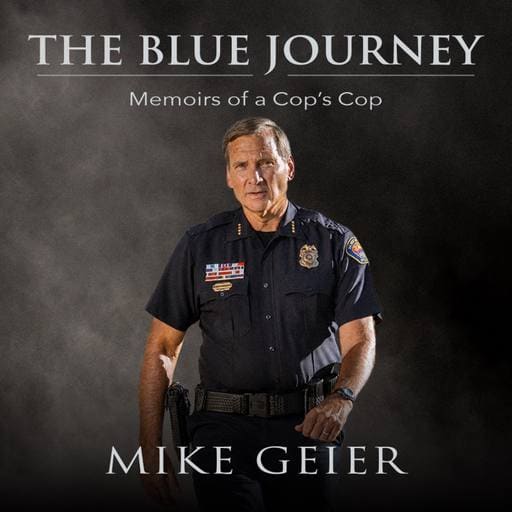
The Blue Journey

Memoirs of a Cop's Cop

  • “I am privileged to have met Mike Geier years ago through a partnership with our non-profit organization. Throughout the years, I have found Mike to be a man of great integrity and compassion, and is one who deeply loves his community, in uniform and out. Through Mike's story, The Blue Journey, one will witness a powerful example of what it looks like to persist in one's calling, no matter what challenges lie ahead. Mike's memoirs prove that a heart to impact the world, coupled with unwavering faith, strong work ethic, and great determination will leave a beautiful legacy that will go on for generations to come.”

    Valerie Jameson

    President and Founder, Stand True 4 Blue

  • “An actual 'cop's cop' book from start to finish. A refreshing life story about honor, integrity, and selfless service. Having known and worked for Chief Geier (Ret.) for many years, he is true to his word and cares deeply for others, as is exemplified through the pages of this fantastic book.”

    Adam Anaya

    Deputy Commander, Albuquerque, NM Police Department; Chief Warrant Officer 2, New Mexico Army National Guard

About the book

The Blue Journey

Behind every headline about crime, every police tape, every badge, there are human beings who chose to walk toward the danger everyone else runs from.

Most people see law enforcement from the outside, through a windshield or a news screen. What they rarely see is the weight of the years, the calls that never leave you, the slow climb from patrol officer to the desk where the hardest decisions land. Mike Geier lived all of it, and The Blue Journey is his account of a career built from the ground up, ending at the chief of police of APD.

This is not a polished institutional story. It is raw and real, the kind of account that can only come from someone who was actually there. Geier writes from inside the work, the crime scenes, the politics, the grief, and the moments of unexpected grace that keep good officers going. He does not dress it up. He tells you what it cost and what it meant.

You do not need to agree with every decision, or understand every call, to finish this book with something you did not have before: genuine respect for the people who put on the uniform and stay. That respect is not complicated to give. It only takes knowing the truth.

Inside this book

01/24
Chapters
Section

The First 20

Geier emphasizes the crucial nature of taking the first steps in any journey, framing these initial actions as key to personal growth and exploration amidst uncertainties that lie ahead.

N° 01

Destiny

Exploring the interplay of choice and fate, Geier reflects on pivotal moments from his youth, detailing his journey toward becoming a police officer and the lessons learned from both missteps and successes.

N° 02

Congratulations, You’re a Cop

With excitement and pride, Geier recounts his first day as a police officer, sharing the camaraderie he built with colleagues and the challenges that defined his early experiences on the job.

N° 03

Welcome to the Greatest Show on Earth

Geier reflects on his dedication to law enforcement during critical moments of his early career, underscoring the emotional challenges he faced while honoring the legacy of fallen officers.

N° 04

Now You’re One of the Dicks

Navigating the complexities of juvenile crime as a detective, Geier shares significant cases and highlights the importance of respectful treatment and procedural justice in his interactions with youth.

N° 05

Back to the Blues

Geier recalls his return to street patrol, illustrating resilience and adaptability as he confronts various incidents and collaborates with younger officers to combat rising crime.

N° 06

Men in White

As a newly promoted sergeant, Geier emphasizes leadership, community policing, and the importance of trust-building as he navigates the challenges of managing officers and dynamic police work.

N° 07

Becoming a Leader

Geier reflects on his leadership journey, advocating for modernized police training and ethical practices while sharing personal anecdotes that shaped his commitment to serving the community.

N° 08

The Transformation

Experiencing personal and professional growth, Geier revitalizes himself during a break in Florida, returning to intensified enforcement efforts that lead to significant community protection achievements.

Section

New Horizons

Geier begins to explore new opportunities and personal development, hinting at insights about navigating challenges and embracing the excitement of pursued paths.

N° 09

The Oldest Rookie

Reflecting on a significant transition, Geier shares the emotional challenges and determination faced as he becomes the oldest rookie at the Albuquerque Police Academy, ultimately excelling in his training.

N° 10

The Dark Ages

Geier recounts gripping encounters that highlight the complexities of law enforcement, including a harrowing standoff with a suicidal youth. These narratives reveal his evolving understanding of police work amidst significant psychological challenges and the ever-present danger of the job.

N° 11

Prove Yourself to Yourself, Not Others

Geier shares his experiences during night shifts with the Northeast Area Command, detailing tense encounters and the psychological toll of policing. He emphasizes personal accountability and the journey of proving oneself through action, inspired by the mentorship he received.

N° 12

Gang Life: Family, Friends, and Violence

Geier immerses readers in the complexities of gang life in Albuquerque, detailing his work in the Gang Unit and efforts to educate the community. The chapter provides a raw look at a significant case and highlights the personal toll of policing amid gang violence.

N° 13

The Negotiator

Sergeant Matt Lyons narrates the emotional challenges of negotiating life-threatening situations, showcasing how empathy and communication can save lives. He advocates for compassionate policing approaches, emphasizing the importance of understanding over force.

N° 14

Onward and Upward

Geier underscores the value of continuous learning and mentorship in law enforcement, sharing insights from his rise through the ranks. His commitment to community safety and personal growth drives initiatives like the successful Party Patrol program.

N° 15

The Dark Side of Violence

Geier reflects on his promotion to Captain and the painful realities of violent crime, detailing significant cases such as the Arlington Molester and the West Mesa murders. He advocates for victim support and public awareness to combat the darkness of violence.

N° 16

Welcome to the War Zone

Mike Geier reflects on his challenging return as Area Commander in Albuquerque's Southeast Area Command, navigating high crime rates and community struggles while implementing innovative policing strategies and addressing internal misconduct to foster public trust.

N° 17

Welcome to the City of Vision

As Geier embarks on his tenure as Chief of Police in Rio Rancho, he faces a resistant department while grappling with the profound loss of two officers, using their legacies to inspire reform and improve community relations amidst the challenges of law enforcement.

Section

The Final Act

The narrative reaches its climax as Geier highlights the transformative journeys of key characters, exploring themes of redemption and connection as they confront their fears, culminating in significant personal revelations and a resolution of conflicts.

N° 18

Top Gun

Mike Geier's ascension to Chief of Police in Albuquerque reveals his ambitious strategies for reforming the department, focusing on community policing and technological advancements to ensure accountability and public safety amid rising crime rates.

N° 19

The Dance

Reflecting on a tumultuous final year, Mike Geier navigates the challenges of the COVID-19 pandemic and civil unrest, revealing the complexities of reforming police practices while contending with internal resistance and a deeply polarized political landscape.

N° 20

We Are All in This Together

Reflecting on a tragic accident that claimed the life of six-year-old Joel Muma, Geier navigates the complex aftermath as Interim Chief of Police in Albuquerque, forging a partnership with the Muma family to promote healing and reform within the department in Joel's honor.

N° 21

This Is Where the Cowboy Rides Away

Geier's final months as chief of the Albuquerque Police Department are marked by unprecedented challenges, including the pandemic and civil unrest, as he navigates systemic issues and critiques the detrimental effects of strict federal oversight on both officers and community safety.

N° 22

Police Bloopers and Shenanigans

Highlighting the role of humor in law enforcement, Geier shares personal anecdotes that illustrate how laughter serves as a crucial coping mechanism for officers facing the harsh realities of their job, fostering resilience and camaraderie amidst stress and trauma.

N° 23

Epilogue: Reflections

Geier reflects on his life and the enduring influence of his mother, emphasizing the values of perseverance and service she instilled in him. He poignantly shares memories of her support, culminating in a call to honor those connections that define true success.

N° 24

Final Words

Geier candidly discusses the challenges he faced in his final months as a police officer, shedding light on mismanagement and corruption that impacted his work. Through personal anecdotes, he seeks to convey the emotional toll of his experiences and the broader systemic issues within policing.

Your book on Storybase

Get more out of every chapter.

Two of the many features included with your digital book on Storybase.

Immersive mode

Read and listen together.

Play the audiobook and follow along as each word lights up in time with the narration.

“Destiny is not a matter of chance; it is a matter of choice.” William Jennings Bryan

What exactly is destiny? The dictionary definition is “the inevitable fate to which a person is destined” or a “predetermined course.” But is this true? People often wonder whether one can control their own destiny in life. Some believe that we are the masters of our own fate and the captains of our destinies. Still others will say that God has a way of getting us to our destiny. God provides the opportunities and the road map for us to follow, but there are probably times when He lets us fail in order to learn from our mistakes. I learned that sometimes things happen to us that we don’t understand, and it is these things that become the doors and windows to what lies in store for us in life.

Tony Robbins once said, “The only impossible journey is the one you never begin.” I believe mine began early in my life.

Dick Tracy Crime stoppers Club

When I was a young boy I liked playing “cops and robbers” and I always preferred being the good guy in those scenarios. I was even a card-carrying member of the Dick Tracy Crime Stoppers Club from the Ray Raynor TV cartoon show on WGN TV that I watched after school. I dreamed about being a policeman when I grew up. However, there were a few points in time where I wasn’t quite sure. When I was in first grade, the nun who was my teacher had everyone tell the class what their fathers did for a living. The boy who went before me told us that his dad was a fireman. I distinctly recall the nun making a reference to how my dad also worked in a job that protects people. To this day I cannot understand what came over me but for some unknown reason my answer was, “My dad is also a fireman.” I still feel guilty about that, but I am grateful the teacher just smiled and moved on.

My actual career epiphany occurred during my last semester in college. I was studying a chapter about the police in my sociology textbook. My interest in that profession piqued once again, but the turning point was actually a small cartoon on one of the pages. It depicted a little boy talking to his father who was a police officer in uniform. The caption read, “Dad, when I grow up, I want to be a cop just like you.” That was my moment of reckoning. Up until that time I had no real idea of what my future would be. I was on the verge of being a 20-year-old college dropout.

Follow every word at your own pace.

AI Assistant

Ask your book a question.

Ask questions, unpack a passage, or explore an idea with an AI assistant that draws on this book.

Example conversation

How do I turn a string of mistakes into something useful instead of just feeling stuck?

AI Assistant

You can treat the mistakes as part of the route, not proof you’re off it. Here, the bad calls, accidents, and scares are framed as the very things that shaped better judgment.
The Blue Journey

Destiny

Keep exploring without leaving the book.
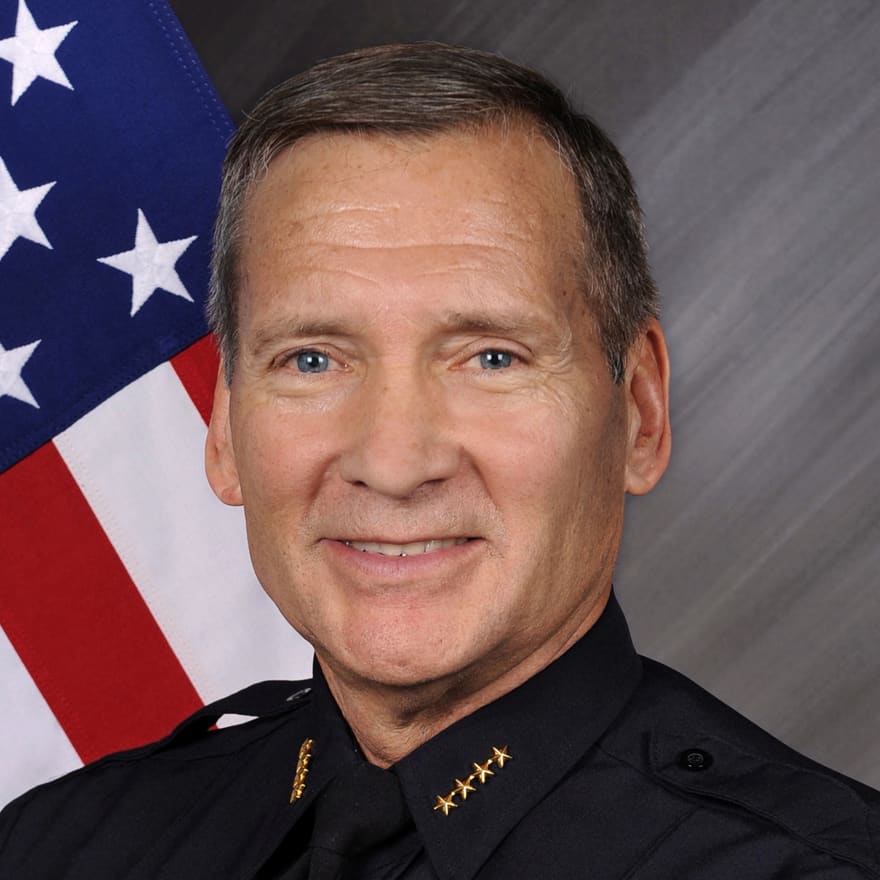
Mike Geier

About the author

Mike Geier

Former Chief of Police, ABQ, NM

Mike Geier is the former Chief of Police of the Albuquerque Police Department (APD), with a law enforcement career spanning nearly 47 years. He began his career in 1974 with the Wilmette, Illinois Police Department, retiring as a lieutenant after 20 years. He later joined APD, where he served in numerous leadership roles before becoming Chief of the Rio Rancho Police Department and ultimately returning to lead APD from 2017 to 2020. Throughout his career, Geier held key positions in anti-crime, gang enforcement, crisis negotiations, emergency response, violent crimes, and area command. As Chief, he helped drive crime reduction, strengthen community relations, reform use-of-force policies, and implement new public safety initiatives. Now retired, Mike remains active as a fitness enthusiast and competitor in national and international police Olympics. He is also a devoted husband, father, and grandfather.

More from Mike Geier

Print + Digital

Hold it. Read it. Listen.

Every way to read “The Blue Journey”: printed and shipped, the audiobook for the road, and the ebook in your pocket. Yours forever.

Hardcover edition

With dust jacket · Delivery dates are shown at checkout

Ebook

Read on any device, instantly, forever.

Audiobook

Listen anywhere, with synced narration.

Printed on demand by our print partners. No returns except defects — damaged or lost shipments are reprinted at no cost.

From the book

Chapter 1 · Destiny

“Destiny is not a matter of chance; it is a matter of choice.” William Jennings Bryan

What exactly is destiny? The dictionary definition is “the inevitable fate to which a person is destined” or a “predetermined course.” But is this true? People often wonder whether one can control their own destiny in life. Some believe that we are the masters of our own fate and the captains of our destinies. Still others will say that God has a way of getting us to our destiny. God provides the opportunities and the road map for us to follow, but there are probably times when He lets us fail in order to learn from our mistakes. I learned that sometimes things happen…