
N° 01
Chapter 1: Yes?
Every morning presents a pivotal question: which kingdom will we build today? Johnson illustrates how our choices are jumping points for God's mission, urging us to respond to divine callings with a commitment to service.

The audiobook comes free with the eBook when it's out in October 2026.
Begin Reading Today
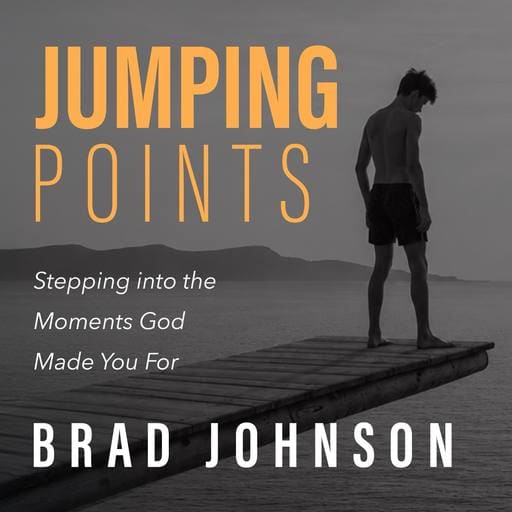
God’s interruptions aren’t accidents. They’re invitations. Right now, somewhere close to you, a need matches exactly what God has placed in your hands. Brad Johnson calls these moments jumping points: divine opportunities when God places the right person in the right place, at the right time, with the right gifts to fulfill a purpose He prepared in advance. But when our vision is clouded by false identity, possession, performance, and pride, these invitations begin to look like everyday inconveniences. In Jumping Points, Brad helps clear away that blur so you can see where God is already at work and recognize your place in His plan. Drawing on nearly thirty years of life-changing work in Haiti, he offers three steps: look up and see the need, look in and recognize what God has given you, then lean out and invest your life in what lasts. To step into the life you were created for, you don’t have to do everything. You simply have to say yes to what God places in front of you.
Every morning presents a pivotal question: which kingdom will we build today? Johnson illustrates how our choices are jumping points for God's mission, urging us to respond to divine callings with a commitment to service.
Surrender is often seen as defeat, but Johnson reframes it as the key to discovering one's true identity. By exploring Biblical examples, he reveals that embracing weakness can lead to profound strength and purpose.
As Hurricane Matthew looms over Haiti, Johnson emphasizes the necessity of mission clarity amid chaos. This chapter sets the stage for aligning with Jesus's vision and understanding the stakes involved.
Rather than crafting personal visions, Johnson insists we join God's already-existing mission. By addressing spiritual cataracts that obscure our purpose, he highlights the importance of aligning our gifts with divine needs.
Johnson critiques humanity's instinct to possess rather than pursue God, illustrating how this desire obscures our vision. He stresses that true fulfillment comes from seeking God's righteousness, not earthly acquisitions.
Performance often clouds our sense of identity, leading us to live for validation rather than authenticity. Johnson discusses how Jesus rejected the pressure to perform, exemplifying true strength in self-acceptance.
Every morning presents a pivotal question: which kingdom will we build today? Johnson illustrates how our choices are jumping points for God's mission, urging us to respond to divine callings with a commitment to service.
Surrender is often seen as defeat, but Johnson reframes it as the key to discovering one's true identity. By exploring Biblical examples, he reveals that embracing weakness can lead to profound strength and purpose.
As Hurricane Matthew looms over Haiti, Johnson emphasizes the necessity of mission clarity amid chaos. This chapter sets the stage for aligning with Jesus's vision and understanding the stakes involved.
Rather than crafting personal visions, Johnson insists we join God's already-existing mission. By addressing spiritual cataracts that obscure our purpose, he highlights the importance of aligning our gifts with divine needs.
Johnson critiques humanity's instinct to possess rather than pursue God, illustrating how this desire obscures our vision. He stresses that true fulfillment comes from seeking God's righteousness, not earthly acquisitions.
Performance often clouds our sense of identity, leading us to live for validation rather than authenticity. Johnson discusses how Jesus rejected the pressure to perform, exemplifying true strength in self-acceptance.
Every morning presents a pivotal question: which kingdom will we build today? Johnson illustrates how our choices are jumping points for God's mission, urging us to respond to divine callings with a commitment to service.
Surrender is often seen as defeat, but Johnson reframes it as the key to discovering one's true identity. By exploring Biblical examples, he reveals that embracing weakness can lead to profound strength and purpose.
As Hurricane Matthew looms over Haiti, Johnson emphasizes the necessity of mission clarity amid chaos. This chapter sets the stage for aligning with Jesus's vision and understanding the stakes involved.
Rather than crafting personal visions, Johnson insists we join God's already-existing mission. By addressing spiritual cataracts that obscure our purpose, he highlights the importance of aligning our gifts with divine needs.
Johnson critiques humanity's instinct to possess rather than pursue God, illustrating how this desire obscures our vision. He stresses that true fulfillment comes from seeking God's righteousness, not earthly acquisitions.
Performance often clouds our sense of identity, leading us to live for validation rather than authenticity. Johnson discusses how Jesus rejected the pressure to perform, exemplifying true strength in self-acceptance.
Johnson recounts the challenge of pride among children at Hope House, highlighting how past struggles can shape attitudes. The irony of mistreating those once in their position underscores the danger of forgetting our shared humanity.
A closer look at Jesus’s righteous anger reveals the dangers of losing sight of God’s true purpose. Johnson discusses how spiritual blindness curtails the mission, prompting the need to realign with God's vision.
Distraction erodes compassion, making suffering blend into the background of our busy lives. Johnson encourages intentional awareness to recognize divine opportunities for service hidden in the ordinary moments.
Facing an unexpected gift of an ambulance, Johnson grapples with its perceived uselessness until a devastating earthquake transforms the situation, highlighting the importance of being open to unforeseen purposes.
Despite years of setbacks and skepticism, Mel Fisher’s unwavering mantra of 'Today is the day' leads him to a monumental treasure find, prompting reflection on the true value of dreams and sacrifices.
Johnson explores the transformative ideas behind ordinary objects, spotlighting innovators like John Sylvan, whose vision changed coffee consumption, and revealing how simple thoughts can lead to significant cultural shifts.
With heartfelt gratitude, Johnson acknowledges the support of his family, mentors, and community, illustrating how their sacrifices and dedication have made his life's work and mission possible.
Johnson, the founder and CEO of Mission of Hope, shares his journey of service in Haiti, underscoring the organization's impact on life transformation through holistic support for communities.
Mission of Hope aims to bring life transformation through Christ, emphasizing the collaboration with local churches to meet both spiritual and physical needs, inviting others to join in this impactful mission.
AI Assistant
Ask questions, unpack a passage, or explore an idea with an AI assistant that draws on this book.
Example conversation
If I'm already comfortable, what does a 'jumping point' look like for me?
AI Assistant
It can be the moment you sense God nudging you to use your time, money, or plans differently instead of staying in your comfort zone. The point is to notice when obedience would matter more than ease.
Jumping Points
Chapter 1: Yes?
Keep exploring without leaving the book.

About the author
Founder and CEO, Mission of Hope
Brad Johnson is the Founder and CEO of Mission of Hope. Since 1998, when he and his wife Vanessa moved to Haiti, he has led the organization’s mission to see life transformation for every man, woman, and child by partnering with local churches through education, food security, medical care, and community engagement. Under Brad’s leadership, Mission of Hope has grown into one of the largest trusted partners across Haiti and the Dominican Republic, serving millions of people.
More from Brad JohnsonPrint + Digital
Every way to read “Jumping Points”: printed and shipped, the eBook in your pocket, and the audiobook when it's out. Yours forever.
Paperback edition
Delivery dates are shown at checkout
eBook
Read on any device, instantly, forever.
Audiobook
Coming October 2026. Free with this edition.
Printed on demand by our print partners. No returns except defects — damaged or lost shipments are reprinted at no cost.
From the book
Chapter 1: Yes?
Every morning, when we open our eyes, we face a defining question: What kingdom will we build today?
This simple question shapes our lives as followers of Jesus. Each decision—big or small—builds either God’s kingdom or our own. These moments of choice, what I call jumping points, are invitations to join Team Hope: God’s strategic force for reaching a hurting world.
The question isn’t whether God will call you—it’s whether you will answer. One thing is for sure: God is not running short on callings; we are running short on commitments. Will we say, “Here I am”? Will we say, “Yes, Lord, use me”?
The Divine Disruption